
Materials, Formats, Finishes & Everything in Between
Choosing a restaurant menu involves more than deciding what food to list. The materials, construction, size, and design all affect how the finished product looks, feels, and performs.
This guide will help you compare the most common options and determine which features matter most for your restaurant.
Step 1: Choose Your Menu Material
The right material depends on how often your menus are handled, how frequently they’re updated, and where they’re used.
| Material | Best Suited For | Key Considerations |
|---|---|---|
| Paper | Takeout, seasonal, frequently updated menus | Flexible and economical, but less resistant to moisture |
| Laminated Paper | Everyday dine-in menus | Protective finish, easy to wipe clean, durable under regular use |
| Synthetic | Outdoor dining, bars, high-traffic environments | Water resistance or waterproof performance depending on stock |
| Specialty Paper | Premium presentations and limited-use menus | Distinctive textures and finishes, with durability varying by material |
Our Tip: Don’t choose based on appearance alone. A menu used hundreds of times a week has different requirements than one replaced every month.
Step 2: Find the Right Format
Flat Menus
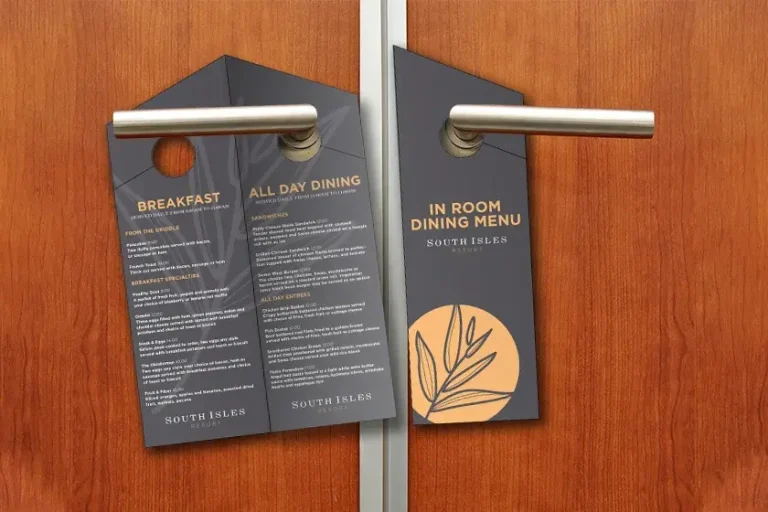
A simple, easy-to-navigate option for smaller selections, drinks, desserts, and specialty offerings.
Bi-Fold & Tri-Fold Menus
Ideal for organizing additional content while keeping the finished menu relatively compact. Popular for takeout menus and larger food selections.
Coil Bound Menus
A practical solution for extensive menus that need multiple pages and easy page turning.
Saddle Stitched Menus
A booklet-style construction that offers a polished way to organize larger selections.
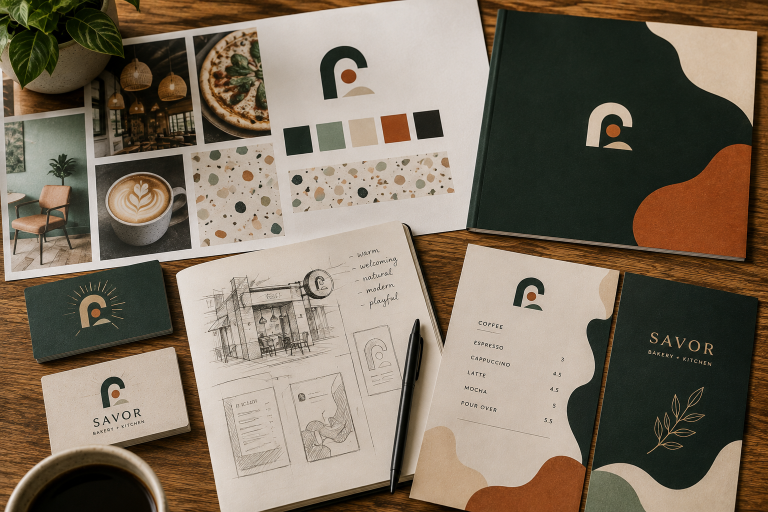
Menu Covers & Replaceable Inserts
A flexible approach for restaurants that want a durable exterior while allowing individual pages to be changed as needed.
Step 3: Consider Size and Layout
Menu size should be determined by content and usability, not simply how much information can fit on a page.
Before choosing dimensions, consider:
- How many menu categories you need.
- Whether you’ll include photographs.
- The length of item descriptions.
- Readability at the final printed size.
- Available table space and storage.
- Whether the menu will be used indoors or outdoors.
A smaller menu with a clear layout can be more effective than a larger one filled with tightly packed text.
Step 4: Explore Finishing Options
Finishes influence both the appearance and functionality of a menu.
Gloss Finishes: Enhance color vibrancy and create a smooth, reflective appearance.
Matte Finishes: Provide a softer, less reflective look that can complement understated designs.
Specialty Textures: Add a tactile element to selected paper-based menu constructions.
Protective Lamination: Helps protect printed surfaces from everyday handling and moisture.
Availability depends on the material and construction selected.
Step 5: Plan for Updates and Replacements
One of the most important questions to ask is how frequently your menu changes.
Restaurants with seasonal offerings or frequent pricing adjustments may benefit from economical paper menus or replaceable inserts.
Restaurants with stable menus may prefer more durable constructions that can withstand repeated handling.
Consider both the initial purchase cost and the expected replacement frequency.
Your Menu Planning Checklist
- Identify where and how the menu will be used.
- Estimate how frequently the content will change.
- Choose a suitable material.
- Select the format and approximate size.
- Organize categories and descriptions.
- Consider photography, branding, and finishes.
- Review cleaning and storage requirements.
- Confirm quantities and desired delivery timing.
- Review a design proof before production.
Ready to Put It Together?
The best menu combines thoughtful presentation with practical performance. Understanding your options makes it easier to create something that suits your restaurant, your customers, and your day-to-day operation.
Table Partners can help you explore available materials, formats, and design possibilities as you plan your next menu project.