
Takeout menus may seem like a simple piece of printed material, but they can play an important role in how customers interact with your restaurant.
Unlike dine-in menus, which are typically used within a controlled environment, takeout menus travel. They end up on kitchen counters, refrigerator doors, office desks, and in the hands of customers who may be deciding where to order their next meal.
A well-designed takeout menu does more than display food and prices. It makes ordering convenient, reinforces your brand, and gives customers a reason to keep your restaurant in mind.
So what makes a great takeout menu?
Design for Convenience First
The most effective takeout menus make information easy to find.
Customers looking at a takeout menu often have a specific goal: decide what to order and figure out how to get it. Unlike a dine-in experience, there’s usually no server available to answer questions or guide them through the options.
That makes organization especially important.
Group items into clear categories, use readable typography, and make prices easy to locate. If your restaurant offers different ordering options, clearly communicate whether customers can order by phone, online, or in person.
Important information should never be difficult to find.
Every takeout menu should make these details easy to access:
- Restaurant name and contact information.
- Ordering instructions and website.
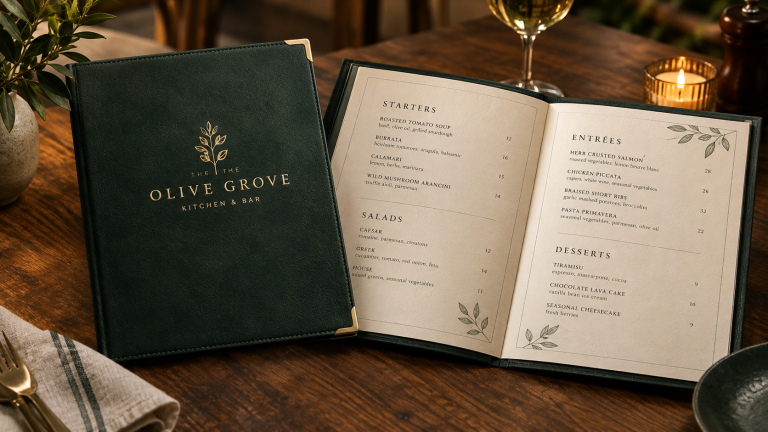
- Menu categories, descriptions, and prices.
- Pickup and delivery information, where applicable.
- Location and operating hours.
- Relevant notes about customization, allergens, or availability.
The goal is to make ordering feel straightforward from the moment someone picks up the menu.
Choosing the Right Format
Takeout menus come in a wide range of shapes and sizes, and the best choice depends on how much information you need to include and how customers will receive them.
Flat Menus
Single-page menus are a straightforward option for restaurants with focused offerings.
They’re easy to distribute, display, and include with orders. Flat menus also work well for limited-time offerings, lunch specials, and smaller menus that don’t require multiple panels.
Bi-Fold Menus
Bi-fold menus provide additional space while maintaining a relatively simple layout.
The front panel can introduce your restaurant and highlight important information, while the interior provides room for menu categories, descriptions, and pricing.
This format works well for restaurants that want a little more structure without creating an oversized piece.
Tri-Fold Menus
Tri-fold menus are a popular choice for takeout because they offer multiple panels in a compact format.
Restaurants can separate categories, highlight popular items, and dedicate space to ordering information or promotions.
When folded, they’re also convenient for customers to store and keep for future use.
Booklet-Style Menus
For restaurants with extensive offerings, a multi-page takeout menu may provide the room needed to present everything clearly.
Booklet-style formats can accommodate larger selections, detailed descriptions, and additional information without overcrowding individual pages.
However, more pages aren’t always better. The format should match the amount of content rather than simply making the menu larger.
Make Your Branding Memorable
A takeout menu is also a piece of marketing material.
Every time a customer sees it, they’re reminded of your restaurant. That’s why its design should feel consistent with the rest of your brand.
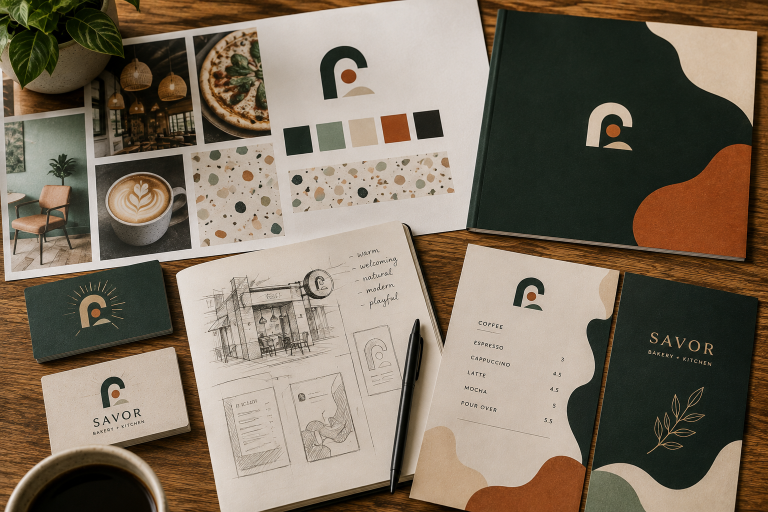
Colors, typography, photography, illustrations, and layout all contribute to that impression.
A casual neighborhood pizzeria might use bold graphics and playful messaging, while an upscale restaurant may prefer a more minimal approach with refined typography and carefully selected imagery.
Neither approach is inherently better. What matters is that the design feels authentic to the restaurant.
A recognizable takeout menu can help customers remember where they ordered, what they enjoyed, and where they might want to order again.
Give the Front Cover a Purpose
For folded takeout menus, the front cover is valuable space.
Rather than filling it with unnecessary decoration, use it to establish your restaurant’s identity and give customers a clear reason to open the menu.
A strong front cover might feature your logo, a signature dish, an inviting photograph, or a short message that communicates what makes your restaurant different.
The most important information should remain easy to find, even when the menu is folded.
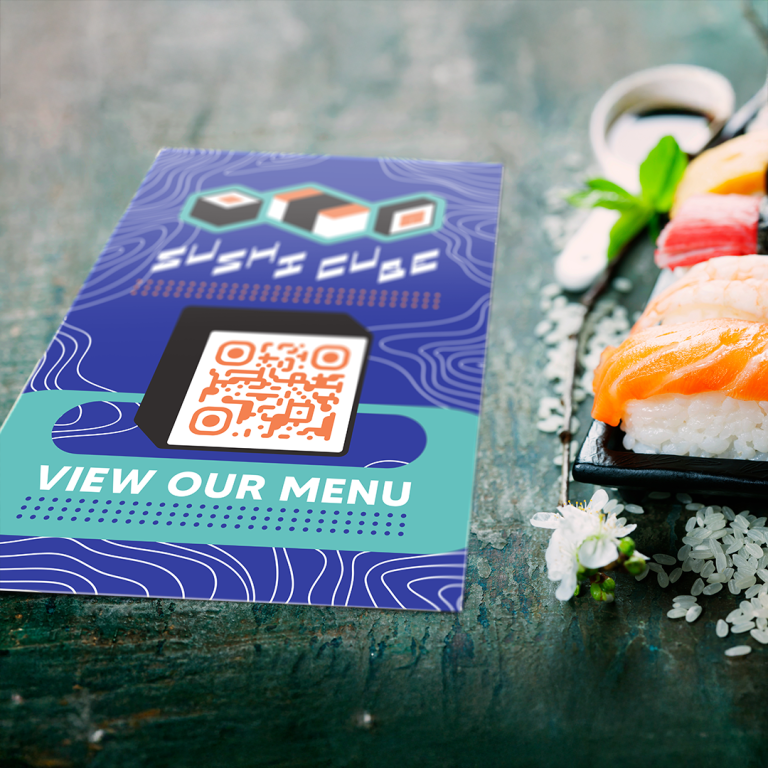
Consider including a website, phone number, or QR code that directs customers to online ordering.
The cover should be visually appealing, but it should also be useful.
Use Photography Thoughtfully
Food photography can make a takeout menu more engaging, particularly when customers are unfamiliar with certain dishes.
However, filling every available space with photos can make a menu difficult to navigate.
Instead, use photography strategically.
Highlight signature dishes, popular combinations, or items that benefit from a visual explanation. Make sure the images accurately represent what customers can expect to receive.
If photography isn’t part of your brand’s visual style, illustrations, patterns, typography, and color can create just as much personality.
A strong takeout menu doesn’t necessarily need more images. It needs the right visual balance.
Think About Paper and Print Quality
Takeout menus are often produced in larger quantities and distributed frequently, so cost and practicality matter.
Paper is a natural choice because it offers flexibility in size, weight, finish, and quantity.
Lighter paper stocks may work well for high-volume distribution, while heavier stocks can create a more substantial feel for menus intended to be kept.
Finishes also influence the final presentation.
Glossy paper can make photographs and colors appear more vibrant, while matte finishes often provide a softer, less reflective appearance.
Restaurants should also consider how frequently prices or offerings change. If updates happen regularly, a simpler and more economical format may be preferable to an elaborate piece that quickly becomes outdated.
The best option balances appearance, usability, and replacement costs.
Connect Print With Digital Ordering
A printed takeout menu doesn’t have to exist separately from your restaurant’s digital experience.
Adding a QR code can give customers a convenient way to move from browsing a physical menu to placing an order online.
For example, a code labeled “Scan to Order Online” can direct customers to your restaurant’s ordering platform.
Other useful destinations might include catering information, current specials, loyalty enrollment, or a full digital menu.
The important part is making the destination clear.
A QR code should support the printed menu, not force customers to scan simply to access information that could have been included on the page.
Make Every Takeout Order an Opportunity
One of the most practical ways to distribute takeout menus is to include them with completed orders.
A customer who enjoyed their meal may keep the menu for future reference or pass it along to someone else.
Menus can also be distributed through local partnerships, community events, nearby businesses, and other appropriate promotional opportunities.
Restaurants can use these printed pieces to highlight catering services, family meal packages, lunch specials, or other offerings customers might not know about.
A takeout menu that travels beyond the restaurant can continue communicating your brand long after the original purchase.
Small Details Make a Big Difference
Before sending a takeout menu to print, review it from the customer’s perspective.
Is the text readable at the final printed size? Are prices easy to understand? Does the folded layout make sense? Can someone quickly figure out how to order?
It’s also worth checking whether the menu will fit comfortably inside takeout bags, display holders, or other places where it may be distributed.
A few small adjustments to spacing, organization, or format can make the finished product significantly easier to use.
And because takeout menus often contain information that changes over time, establishing a process for reviewing and updating artwork can help prevent outdated menus from circulating.
A Menu Worth Keeping
The best takeout menus combine thoughtful design with everyday practicality.
They make ordering easy, present food clearly, reflect the restaurant’s personality, and give customers something useful to keep around.
Whether you choose a simple flat menu, a compact tri-fold, or a more detailed booklet, the goal is the same: create a piece that works for your customers and represents your restaurant well.
At Table Partners, we help restaurants explore takeout menu formats, paper options, printing, and design possibilities to create materials that look great and work beyond the dining room.
Ready to refresh your takeout menus? Explore custom menu solutions with Table Partners and create something your customers will want to keep.